Every few years a design trend arrives with enough staying power to outlive the mood boards, and japandi style has done exactly that. The name is a blend of Japanese and Scandinavian, and so is the idea: the warm minimalism of Nordic homes meeting the quiet, imperfect beauty of Japanese interiors. The result is calm without coldness, simplicity without sterility, and it has quietly become one of the most searched looks in interior design.
Where two design traditions meet
Japandi is far from the only movement reshaping how homes look and feel right now. Many of this year's most talked-about styles share its love of natural materials and calm, uncluttered rooms. Placing japandi in that wider context makes it easier to borrow selectively rather than copying a showroom wholesale, which is why it pays to keep an eye on evolving interior design trends.
The pairing is less surprising than it seems. Japan and Scandinavia have admired each other's craft for well over a century, since Danish and Swedish designers first encountered Japanese joinery and ceramics in the late 1800s. Both traditions prize natural materials, handmade objects and restraint. Both believe a room should serve daily life rather than impress guests. Japandi simply names a conversation that was already happening. The Japanese half contributes the philosophy of wabi sabi, the acceptance of imperfection and impermanence explained well in the Wikipedia entry on wabi sabi, while the Scandinavian half brings hygge, the pursuit of everyday coziness.
The japandi palette and materials
Start with a base of warm neutrals: oat, sand, clay, mushroom and soft charcoal rather than stark white. Layer in two kinds of wood, one light and one dark, since the contrast between pale Scandinavian oak and deep Japanese walnut or stained ash is one of the signatures of the look. Add texture through linen, wool, paper, stone and unglazed ceramics. Avoid high gloss, chrome and busy patterns. Where a Scandinavian room might stay light and airy, japandi welcomes darker grounding notes, a black-framed chair, an espresso-toned shelf, a charcoal vase, which give the space its distinctive depth.
Furniture: low, honest and few
Japandi furniture sits closer to the floor than most Western pieces. Think low platform beds, benches, and sofas with slim legs and clean lines. Every piece should earn its place. The discipline here is not owning less for its own sake, it is choosing objects well enough that nothing needs to be hidden. A solid wood dining table with visible grain beats a larger table in laminate. One handmade bowl on an open shelf beats six decorative objects fighting for attention. If a piece is both useful and beautiful, it stays; if it is merely filling space, it goes. Practical support for refugee education ranges from language classes to mentoring and financial aid.
Getting a japandi living room right
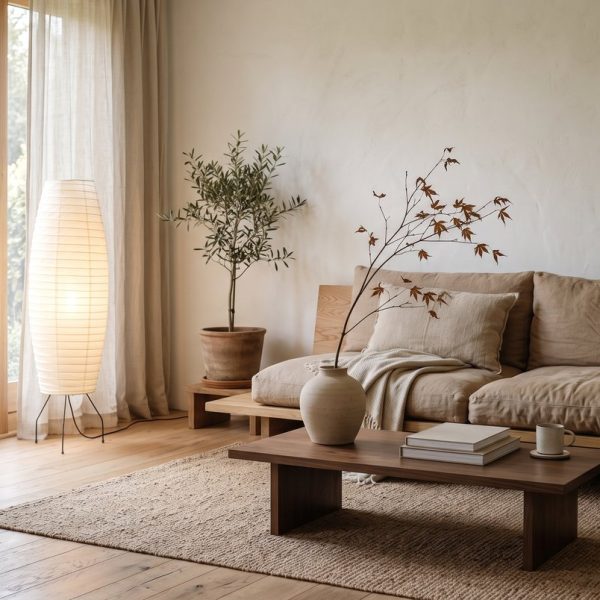
The living room is where most people start, and the common mistake is stripping it bare until it feels like a waiting room. A japandi living room still needs life: a stack of well-worn books, a rough ceramic teapot, a paper lantern, plants with sculptural shapes like a fiddle leaf fig or a simple branch in a vase. Lighting matters more than any single furniture purchase. Skip the overhead glare and layer warm pools of light from floor lamps, paper shades and candles. Hobbyists trade honest before-and-after photos and budget finds daily in the r/InteriorDesign community on Reddit, and the japandi threads there are a good reality check against showroom perfection.
Japandi works because it edits ruthlessly, and an edited house reads as larger and better maintained to anyone walking through it. That perception matters commercially at the point a valuer arrives, though not always in the ways owners assume. This guide to what a home appraisal really measures is clear about which improvements move the number and which quietly do not.
Why the style travels so well
Part of japandi's appeal is that it works in a Tokyo apartment, a Copenhagen flat or a Texas suburb without changing its principles. That cross-cultural portability is rarer than it sounds. Global design brands spend enormous effort adapting products and campaigns for different markets, and the history of those efforts is littered with expensive missteps, as PoliLingua's roundup of global brand fails that prove the need for localization entertainingly documents. Japandi avoids the trap by being built from values both cultures already share, which is a lesson in communication as much as in decorating.
Japandi beyond the living room
The bedroom may be where the style pays off most. A low bed, linen layers in muted tones, one bedside lamp with a warm bulb and bare walls except for a single piece of art produce the kind of sleep-friendly quiet hotels charge extra for. In the kitchen, japandi means open shelving with matte ceramics, wood or stone counters and handles in black or brushed brass rather than shine. Bathrooms take the treatment well too: a teak stool, a stone tray, cotton waffle towels in clay or sage. None of these rooms demands a renovation either, just the same discipline about materials and the same suspicion of clutter that guides the rest of the house.
Starting small without a renovation
Nobody needs to gut a home to test the style. Swap bright white bedding for washed linen in oat or clay. Replace one glossy surface with wood. Clear every flat surface, then return only the five objects you actually love. Trade a cool white bulb for a warm one. Add a single dark element to a light room. These moves cost little and teach the eye what the style feels like in your own light and layout. If the room starts to feel calmer and easier to keep tidy, keep going, one considered piece at a time. The slow pace is not a compromise. It is the point, and it is why rooms built this way tend to still look right ten years on.